


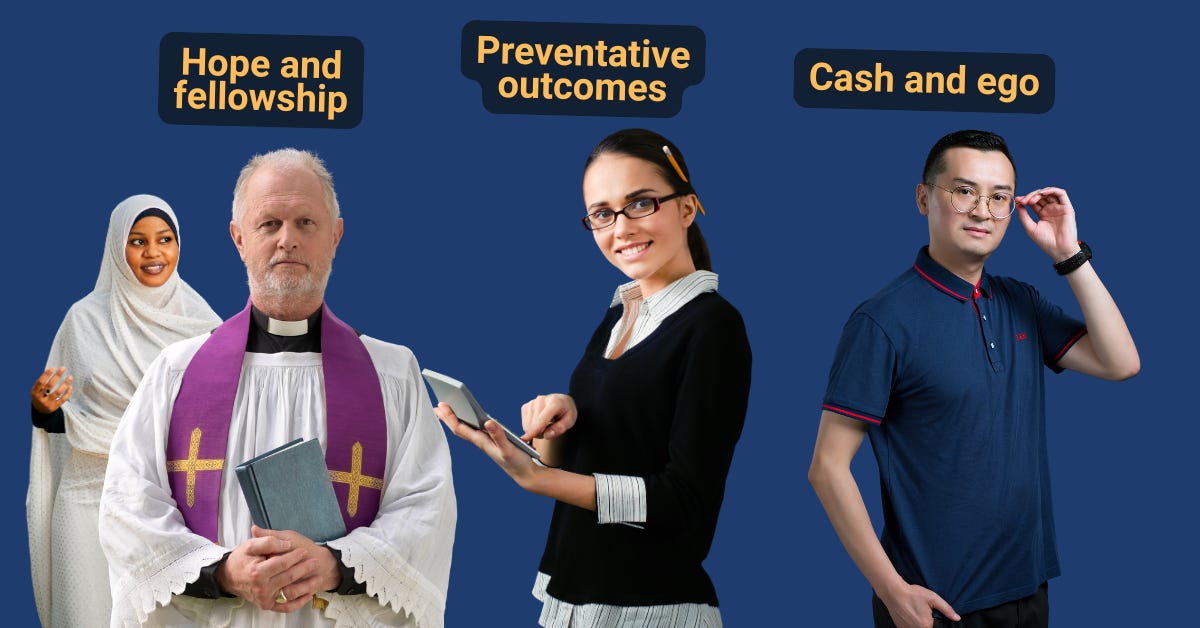
Welcome back to Barely Civil Society, where we are far from refreshed, increasingly anxious, and looking forward to a holiday.
AI is about to kill us, but in the meantime, we will have generated lots of videos of cats giving you the finger. As if we needed AI for that.
The UK has grown a pair and put sanctions on Israeli settlements. It’s something. Nigel Farage is hoovering up crypto donations. And Apple has released a folding phone that only Saudi oil princes can afford. Exciting times.
Spiderman was good. Obsession was brilliant. Backrooms was pretty decent. I did a weekend in Winchester where everyone is called Giles and wears red trousers.
But mostly, I spent three weeks of the summer researching the intersecting histories of charity and socialism. I’ve been down so many rabbit holes I’m growing floppy ears. ‘A nice break’, they ask? ‘A nice breakdown,’ I answer.
Have the last 30 years of Philanthropy failed?
This was the provocative title of the 30 year anniversary celebration of Alliance magazine, which took place in the incredible Aga Khan Centre in Kings’s Cross. A big thank you to Elaine at Alliance for inviting me. Philanthropists gathered. The ceiling was high, so were the ideals, and so, indeed, was I.1
I met Rhodri Davies, who was just as delightful as people said, and did a great job of compering. Tsitsi Masiyawa did an amazing talk, and I want her to adopt me. And I met somebody who had heard of Barely Civil Society, which is a first.

Alliance calls itself the ‘critical friend to philanthropy’. As I said to the editor, I’m sometimes not sure if I’m still a friend. But today made me think I was - with caveats and complications.
You see, I’m a traitor. A double agent. I play both sides.
No, not a bisexual - I work for both funders and funded. Half my time is spent with grant-makers, and half with the people on the other side of the desk. The biscuits are invariably better on the funder side.
Here is what you notice when you cross the rubicon from ‘charity’ to philanthropy. First: don’t imagine people who work in philanthropy don’t ‘get it.’ These, or at least, the ones in this particular circle of largely illuminated funders, are progressive, liberal, left-leaning. (Move towards the Telegraph readers who largely populate the ACF and it may change slightly…) And they care. I bet some of them are even, shhhh, socialists. They care about social change - maybe even more, and with a wider view, than people I meet in many charities. They’re also smart and extremely well educated. (And very middle class, and very white. None of this should be very surprising.)
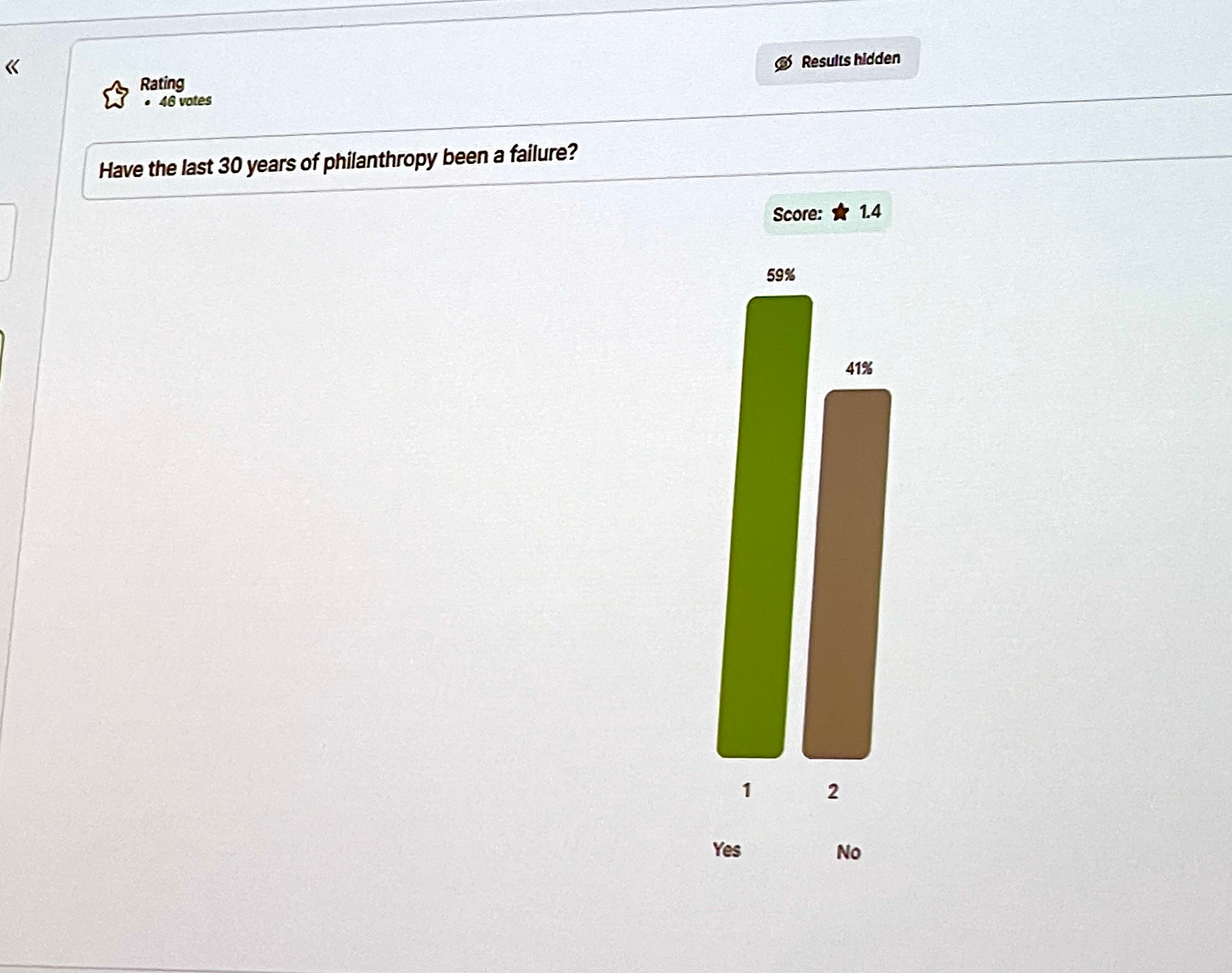
What I also want to get across is that these guys tend to be nice. They’re friendly. Philanthropy conferences are friendlier and tend to be more open, and have a more welcoming vibe. They tend to be very much open to challenge and debate. They talk about big ideas - decolonisation, extraction, globalisation, any number of left-leaning development and social theory buzzwords - they use them; they believe them. They’re historically informed. They are often very critical of philanthropy as an institution - in fact, 60% of them voted to say philanthropy of the last thirty years has failed. And yet, the tone was hopeful. Determined, positive.
Now, I think about the wider third sector conferences I go to. Honestly, the vibe is not great. People tend to look tired. They are not hugely friendly - if anything they are rather competitive and not hugely interested in exploratory conversations.2 The ideas there tend not to be ‘big’ - they are almost entirely managerialist. And they are focused on money, or improving ways of getting it. Wouldn’t you think a conference of philanthropists would talk more about money? They don’t.
So what is this difference about?
People with money don’t talk about money because they have to and don’t need to. People with money have hope - not just politically and in terms of society, but personally. They know they are going to keep their jobs. People with money have time to think. They can even think about the problems with what they do and how to get better - and accept the critical because they are largely unaccountable and do not feel threatened or constantly assailed. They have a certain confidence. And they are not tired because they do not have a daily Sisyphean task, personally experienced, often directly with people in dire need and unsolvable situations, in front of them. They do not have the emotional toll of survival.
Now if some of this sounds like a description of the rich and the poor as individuals, well, that shouldn’t be very surprising. In fact, it could also describe the individual subjective experience of class - what it feels like to live with money or access to resources, and what it feels like to never have it: it writes your subjective consciousness. It writes and shapes how you think, you feel, how you relate to others - for example, you might not feel very open, you might not feel able to think great thoughts, you might not feel very hopeful, and you might feel that competing is your best chance of survival if you aren’t sure where your next meal is coming from. There is less time for the hopeful collaboration than your comfortable, even if progressive, pals might suggest you should pursue. This ‘vibe’ is lived class in action.
When I say there is a class difference between philanthropy and charity, I need to be really clear that I am not (just) talking about individual socio-economic class (although that is undoubtedly an expression and a decider). I’m talking about classes as groups of people with similar relationships to wealth and economic power, and similar interests. I’m especially interested in ‘philanthropy’ and ‘charity’ workers, their structural class position, and their subjective experience - and how this may shape the work they do, the relationships they have, and how they do their work. What I note is that this may contrast and conflict at different levels, and with different relationships to resources.
The friction can be vivid: when I went to the third sector conference earlier this year, I remarked that listening to small charities talk about funders sounded like somebody in an abusive relationship - based, I suggest, more on obliviousness and a class relationship that is always unspoken or brushed under the rug, than on any malign intent. When, in one space, somebody on stage asked if there were ‘any funders here’, one guy put his hand up, and simultaneously his head down, as if anticipating a blow. This, I think, is class resentment in action - and again, it comes from different relationships and positioning to resources - not fundamental misunderstandings of mission or political alignment, as everyday discourses in nonprofits tend to suggest.
And yet, there is hope. There is very significant overlap in the ideas - whether intellectualised, or in the same district framings - between those frontline charities and the ‘funders’ - that is, professionalised philanthropic managers. They are far more sympatico - and if anything, as ever, they are divided by the maintenance of certain ideologies as much as reality. Obsession with risk, ludicrously baroque processes, metrics suited to profit not people, these are the tools they use - but often, it must be said, these are foisted upon them, as much as they are the end grantees.
And why is this? This is because, at the top end is the actual philanthropists, and their associated trustees. Boards stuffed with hedge fund managers and residual aristocracy, or indeed, just family friends. Even if the original money and founder has long gone, or never existed (as in the case of, say, huge public foundations), the great and the good selected for boards bring with them the ideas and ideologies of their own business experience and the view from their world - which they ludicrously and rather self-aggrandisingly claim is meritocratic - and impose those (sometimes obviously, sometimes less so) through boards and governance. Or indeed, sometimes just directly through taking the steering wheel and telling their grant-makers to make the grants.
And perhaps this is why I think the key task for ‘philanthropy’ as an industry is, as fast as possible, to get the money away from philanthropists - and the rich.
In the debate, a philanthropist (who shall remain nameless) was tasked with persuading us that philanthropy had not failed. They talked instead about the decline and failure of liberal democracy - in a way that did not sound entirely disapproving. And they claimed that philanthropy - the actions of the rich - had succeeded precisely where governments had not. And philanthropists were way better now - at least they were better than, for example, “Genghis Khan.” (There was a bit of an intake of breath in the audience at that point.)
This felt to me a rather dangerous argument that could collapse into an apologia for a government of oligarchs - although it didn’t, to be fair. But the legacy of Carnegie - and the viewpoint of many autocracies - continues. They also argued that the problem with governments was actually a problem with ‘the people’ - that ‘we’ did not rise up against our masters. But our masters, after all, are really people like them - the extremely wealthy and powerful. They buy governments all the time. They also do very well at controlling populations ideologically, or when that fails, violently, through said governments and more nefarious means. As the excellent debate challenger pointed out, philanthropy has been a constant force against democracy, and has been used to prevent and pollute it, across history and the world - not to mention that the massive wealth extracted by billionaires is perhaps the most significant cause of global poverty. We might point out therefore that one of the main reasons liberal democracy has failed is precisely because of the ultra-rich and their replacement of taxation with scraps of donation for their own purposes and interests.
What was evident overall - and any glance at a whole range of philanthropists’ discourses in the present or the past will confirm this - is that there is a profoundly solipsistic ideology in the ultra-wealthy which cannot but infect philanthropy as a practice and an industry - even when the managers of the day to day process have the expertise, the right ‘vibe’, and far better knowledge.
It felt very well-timed therefore that Naomi Klein’s new book, and her interview in the Guardian last weekend, talked about how extreme wealth creates supremacists. The wealthy have to believe they are gods among men - otherwise how can they explain, or feel secure in, their wealth? And how can they legitimate it? Philanthropic giving, especially when shaped directly by the giver and their deeply ingrained ideology as a ruling class, both bears the shape of their deformed picture of the world which cannot countenance their own culpability, and helps fulfil this function of legitimation. Both reinscribe their own power.
And this is the myth of the modern philanthropist - that they know best how to spend the money they extracted, for the benefit of the people from whom it was extracted. They pitch themselves as dynamic, entrepreneurial, and of course archetypes of success, and intellectual prowess. They know everything. And very often this means that they will not let others make decisions, or shape how their wealth is used. They hold on to the wealth and the power, because they believe - and must believe - the idea that they are best placed to spend it - otherwise, why would they have it?

For this reason, no amount of enlightened managers and professionals can change a thing unless we remove the yoke of the ultra wealthy and their beliefs - in forms either genuinely delusional, or simply bad faith. What Klein is talking about here is, essentially, a class ideology: a justifying myth that legitimates power and privilege. And this, I think, is still what most profoundly shapes the philanthropy industry. That is because, after all, as Marx told us, and Gramsci expanded, the ruling ideas are always those of the ruling class. And it is very clear, in the world of philanthropy as much as outside it, just who that is.
What this also tells us, as I’ve remarked before, is that we have a remarkably Victorian class system at work in the charity and philanthropy sphere. A wealthy capitalist class who have the money and who direct ‘investment’, a managerial class who manage that effectively and bring their own technologies to bear on it, a lower managerial class of foremen and shop stewards running charities, and below them, the worker bees on the frontlines - entirely alienated from their labour and removed from agency or decisions about what their labour does, or how resources are used. No wonder they are grumpy at conferences and always thinking about money and how awful their managers are. But their manager’s managers’ managers - or rather, the ‘owners’ - are really the problem.
Add in an underclass of the deserving poor as the object of the ‘labour’ and propose a process of ‘transformation’ of resources and labour into a final commodity - that is, ‘charity’ - and you have a Victorian factory. The profit, at the end, is not so much a changed society - how could it be? - as a heroic philanthropy class who have avoided taxation, raised their profile, and bought influence. And meanwhile, it keeps the poor off the streets. (Or does it…?)
So if there is one thing that we can take from this, it is that the absolute priority in the modern philanthropy industry has to be getting the money away from the original philanthropists, and as soon as possible. This is why the most progressive foundations are usually those that have thrown off, or never had, founders - the Esmee Fairbairns, NLCF’s and the like. But even they still remain run largely by bankers and the great and the good. The price of entry to their boards is acceptance of ruling class ideology.
Whatever the next stage would be, who knows. ‘Co-production’ and all the rest might have a chance if the real decision-makers were somewhere else entirely. But it is not the answer alone: as ever, my argument for philanthropy as an industry and a practice is not that we need to change ‘systems,’ but that we need to do something much harder - indeed, almost unspeakable: we need to change the structures.
That involves handing over - or taking - power in ways that our society has rarely achieved - especially when it involves redistributing money and resources.
There’s nothing left but faith….
In the last year, I’ve become interested in the role of faith charities. Not a faith person at all, although as you have seen, I have taken to quoting socialist theologian Paul Tillich on the regular. So why am I interested? Well, there are several key reasons.
The first is that religion is currently being used as a force - and an excuse - for incredible evil in the world. That’s not new - apart from quite a few wars over the years, in all of this, I should add that as a gay man, I have an innate distrust of religions, having grown up during the AIDS crisis and, well, you know, the world.
But there is an increasing schism happening: the rise of the Christiano-fascist death cult in the US - which is barely even an offshoot of Christianity, and hardly even bothers to conceal it at this stage - is one of the greatest threats to democracy, justice and peace, and indeed, possibly even our very survival. And yet, some parts of the Christian world are starting to awake and combat this. The Church of England could be a ‘sleeping giant’ in preventing the rise of extremist anti-migrant, homophobic, Christiano-fascism in the UK, and has started to speak out, albeit too slowly and quietly for my liking. The new Archbishop of Canterbury is deeply liberal and, I am reliably informed, a woman.
Meanwhile, another Pope turns out to be a good guy. Who saw that one coming? Magnifica Humanitas is quite a volley, with impacts I hope are felt far beyond the church. After all, the Pope is perhaps one of the only figures on the planet strong enough to stand up to Trump.

And increasingly, I have found myself having significant common cause with liberal progressive Christians in the US. Especially socialists; hence Tillich. There is a sense that the extreme and increasing cruelty of the Christian right in the US has driven a counter-movement of anti-Trump, liberal socialist Christians to speak out. Socialists and Christians have always made common cause, even if we also have had some significant disagreements.
At the same time, I’ve met in recent years incredibly strong, outspoken, progressive Muslim women and young men who have been galvanised by their own faith, by the war in Palestine, and indeed by a connection with the wider left and social justice movements. They give the lie to the tabloid arguments about universal extremism in the Muslim community - but hey, we probably knew the Daily Mail wasn’t the best source on this. They’re working in community-based charities and are a new generation of leftist thinkers and leaders. Those younger, liberal, progressive, socialist leaders again have the ideas and the power to shape both their own faith communities, and the world around them, for the better.
The other is that faith groups in the charity world have a certain ability: they can talk about doing good things without speaking the language of commissioning, impact, and social sciences - well, to an extent. Faith charities get to talk about the human, even if there is added layer of God. But this strikes me as an area for potential resistance if we are going to take charity back for something more human and focused on love, care and community - not ‘the impact economy’.
And finally, another reason is that I don’t know enough about them. I’m not ‘illiterate’ on religions as I’ve heard faith groups say people are: in fact I was fascinated by religious philosophy, considered studying New Testament history at university (I was fascinated by redaction criticism, which began my interest in texts, iteration, and history), and studied world religions as part of my first degree. But as my research project continues, I’ve realised that I know more about the history of religious charity than I do about the present. So - what’s actually going on in there?
My second field trip
And so, last week I went to the Faith Charities Forum run by Civil Society Media Ltd. This was partly an ethnographic mission, and part of my determination to do more sector citizen journalism, by sharing what different parts of the sector are thinking.
My first thought on arrival was: excellent pastries. Even though they were vegan, which can be really dry. But my second thought was: cultural difference. I had expected to see some religious garb, and so I did - by which I mean, lots of grey suits and skirts, and possibly at least one twin set. Which you don’t see so much of in other places. One or two veils, but the vibe was very white and Christian.
Slightly out of place in full drag, I immediately looked for the nearest Quaker. The cool kids of the faith world, you can always sit at the back of the bus smoking with them. And lo and behold, a young man in dungarees with blue hair appeared. Target acquired.
Later, there was a fascinating question to the Charity Commission for England and Wales from Quakers in Britain about ‘offenders’ barred from being on boards. Problematic when you have a lot of extremely dedicated elders willing to hold placards supporting certain proscribed groups. ‘The law is the law,’ the CC was bound to repeat. And they’re right - so yes, it must change.
The second surprise - why was it a surprise? - was the wall to wall banks in the exhibition hall. Coming from other conferences with broader attendees, there is currently a preponderance of databases, usually AI-assisted, and fundraising products. But here, it was CAF, Reliance Bank, Cazenove capital, one or two high street banks, and several investment funds. Some of these were faith organisations themselves - for example, Reliance is the bank of the Salvation Army. A reminder that many faith organisations started their own banks - and that money, and lots of it, has always been part of the faith charity landscape. So much so, in fact, that Henry VIII did some extensive building/ demolition work to deal with it.
Perhaps this is why, overall, there was much less talk about money on the day - or rather, less talk about the lack of it. Faith charities very often have strong fundraising with a very strong donor base, and often endowments. These endowments, often through legacies and ancient bequests, have actually been the subject of the majority of charity sector regulation over the last millennium. (I have heard the Catholic Church has a bob or two, as does the CofE.) And of course, faith groups are the original motivated donor base.
Combatting hate?
As I mentioned, one of the ideas mentioned several times was ‘religious illiteracy’ and of a lack of understanding of faith, among society at large, and indeed, in charities and the social sector. But of course, as they readily admitted, this is not helped by the highest profile faith stories in the media being so appalling - one speaker showed a slide featuring cherub-faced-neo-Nazi faux-Christian-ethno-fascist-wunderkind Charlie Kirk and a range of hateful groups in the US. Spectacles in the Middle East do not help.
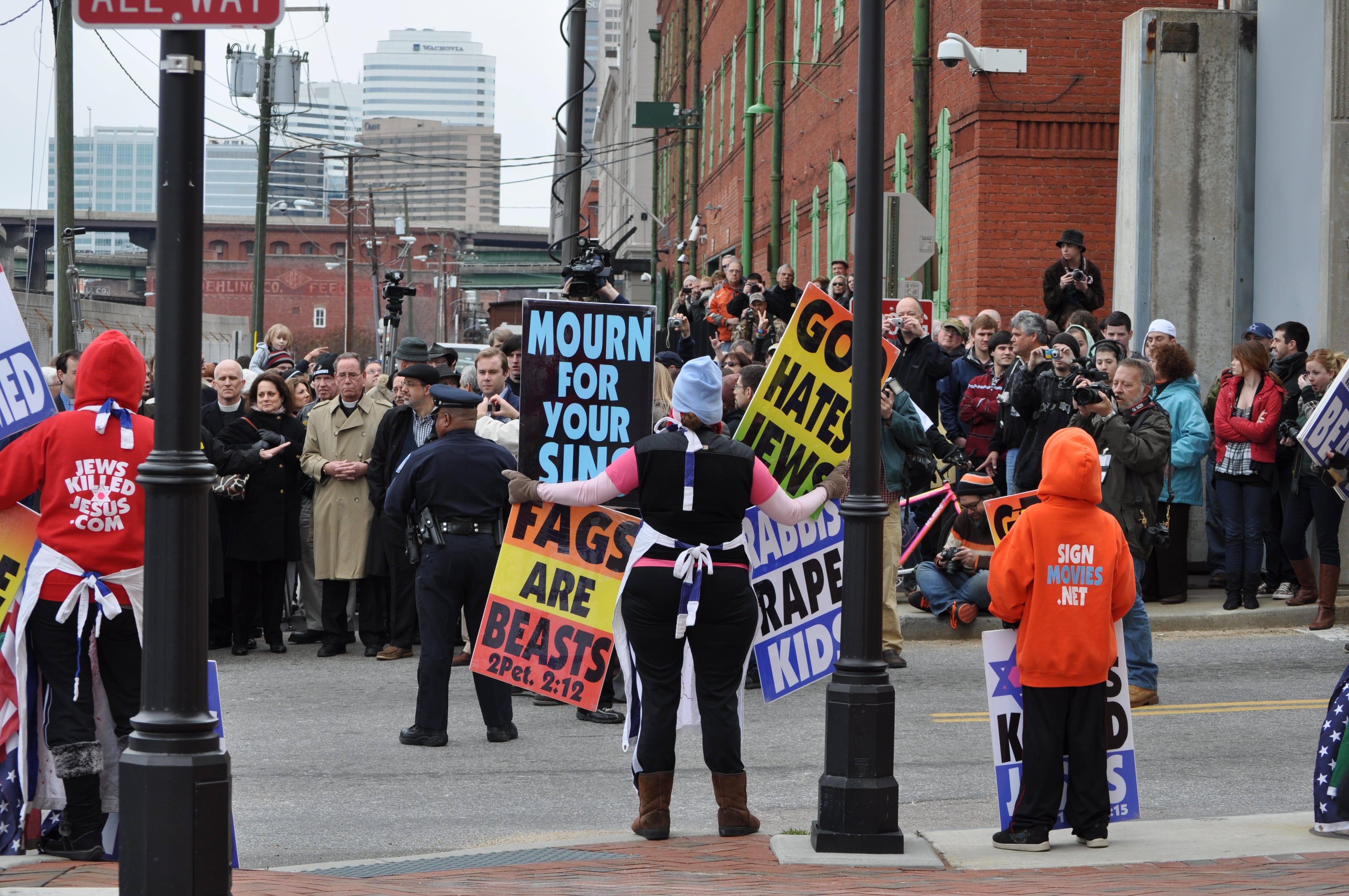

What drew me here was the fact that I think welcoming and loving faith groups could be a powerful vector to combat hatred within faith communities themselves. I talked to a couple of people who said there was a significant sense of shame about being a person of faith at this stage for that very reason: one person told me they had stopped wearing a cross because they worried that people would assume they were one of the bad guys.
When a CEO from a faith-based anti-VAWG group asked a question about what responsibility faith groups had to actively combat that intolerance and hate from within their own (or other) faith communities, it felt somewhat brushed aside. This, of course, is a delicate issue, since one man’s hate campaign is another man’s attempt to save humanity from immorality, especially in the world of faith. Another group I spoke to that day did the most delightful work with children, which then transpired to have been set up by an evangelist movement in the US who are certainly MAGA adjacent. Fixed grin, nice to meet you… The faultlines are strong. And these are often live debates within faith groups and communities themselves, of course. Conservative, liberal/ progressive and radical groupings fight it out constantly.
So if your faith group is looking at how to combat right wing intolerance, you’re not alone. But if you aren’t, why not? I had a drink on Old Compton Street on Saturday night and had to listen to a preacher telling me I was going to hell. It’s the eighties all over again. Which faith groups are standing up to him?
God loves governance
I also found it interesting that when the most controversial issues came up they tended to be explained away or handed off to managerial questions: for example, a talk about ‘misogyny’ and risk turned out to simply be a talk about risk management. Fear of the National Secular Society and the Charity Commission was more of a driver than tackling misogyny.
Governance was an interesting area of debate. Faith charities have particular issues, even if they are not unique. For example, sometimes there can be a very strong conflict between types of authority - administrative, regulatory, secular, and religious. This often clusters around highly charismatic and powerful leaders who can be hard to rein in, and who are very much known to use their power to abuse. I was relieved to hear this discussed very openly. Again, this is not unique to faith organisations, although in a sense the reason charities more broadly suffer from this is because they are based on what were originally religious models: the charismatic founder can have an almost priestly sway over their organisation and flock. As a leader of place-based charities I’ve always been aware of how much there is a level of trust and power that comes simply from being there and ‘ministering’ to your community, whether god is involved or not.
Faith or just good community work?
And it was in this that I felt there was a missed opportunity. One speaker talked about how faith charities presented a ‘unique’ opportunity for commissioners and the current changing landscape for services. That may indeed feature new possibilities given the principles of local devolution to communities.
What faith charities offered, they said, was not solely about ‘services’ but about whole communities and whole people. Faith charities had deep roots, were trusted, and were highly connected, and they gave people ‘hope’.
This is true of many faith charities, for sure. But it also describes a vast range of secular charities and community organisations. The more we’re ALL allowed to do that - to work with whole people, to build relationships of trust, to build hope in our communities, the better our work, and our society become.
We can do that based on faith, or on our common humanity, or indeed, both. What we need to see across faith groups and across community and wider groupings is that we can shoot for the same thing. Of course, we can only do that with a shared vision of a kinder, generous, welcoming and tolerant society. Neither faith nor secular statuses guarantee that. It’s not helpful to claim the status of wider community organisations as a unique facet of faith groups. Indeed, it may be somewhat divisive.
Discursive whiplash
Finally, we come to the remarkable ethnographic experience of what I can only call ‘discursive whiplash’. That is, the sudden shifting of discourses - ways of speaking, ideologies, concepts, framings - with such speed that your neck cracks and your underwear steams.

What struck me in particular was not so much any change between religious traditions - that was barely noticeable in this context.
No, the real clash of religions I saw was narratives of faith, love, care and community and the equally totemic language of impact, efficiency, and effectiveness - the instrumental reason that took over the sector when philanthrocapitalism took the reins. As I mentioned, we moved swiftly from talk about creating hope, to talk about commissioning for preventative outcomes. The shift in discourses from the former to the latter may be counter productive.
When we take a social instrumentalist approach to our charity, and treat it as a way to achieve social outcomes, it becomes harder to focus on what really matters. One speaker, very much a Texan preacher, talked about the value of ‘the encounter’. One person, or many people, meeting an/others, helping or just connecting, is 90% of what charities do. Again, that connects faith and secular - but those ‘service based’ contracts and ‘preventative outcomes’ are buried in discourses and metrics that, even with the best will in the world, will close off those encounters and turn them into transactions. Discourses matter because they shape behaviours and beliefs.

What strikes me is that people in power often provide the benefit of the doubt to faith groups because they are pretty much the only people in our society still allowed to talk about the human, and about love, care and community.
But we need to extend and expand that discourse into the secular realm. This means resisting that instrumentalism just as strongly, with our own language.3
And so…
All in all, a worthwhile ethnographic excursion, an encounter of my own with how faith and socialism/ progressives can intersect - and sometimes not - and some decent pastries.
Thanks again to Civil Society Media (whose excellent news source I quote here every week) for allowing me to attend.
Can I cover your conference? Let me know!
Barely Civil Society is about making the nonprofit world braver.
Here are three ways to help.
Subscribe and become a supporter!
Share!
Support!
You can help me continue this research and writing - including some bigger projects I’m working towards. Could you buy me the tube fare to a conference, or a periodical?

Send me a (nice) message
I love hearing from readers. Drop me a line!
Work with me!
Check out my day job webpage.
Or don’t, see if I care.
For the avoidance of doubt, I am joking. I only take drugs when it’s finance events.
If you’re friendly, or if you have very different experiences, hey, that’s okay, this is just my experience. We all experience things differently. But also, I am very shy at these kind of things. And my goodness it is hard to explain what I actually do.
Of course, a lot of faith groups are not spending every second of their day looking for money from philanthropists and commissioners. In many ways, they can speak their own language because they have their ‘own’ money.