

How I got on people’s nerves this month
In the UK, we have had a flap over the restructure of our membership body for charitable organisations - the 100 year old National Council for Voluntary Organisations. Apparent cuts to its small charity support, and the hiring of 6 Directors on high salaries set the cat among the pigeons. The open letters, and fur, were flying.
The NCVO backlash reveals a sector faultline that only direct workforce representation can bridge
Never one to avoid wading into a crisis and making sworn enemies in my ongoing attempts to nuke my entire career from orbit, I decided to emerge swearing from my cardboard box under a bridge, bottle of meths in hand. Writing in the best third sector organ nobody can afford to read, Third Sector magazine, my argument was that, first, NCVO has always had this big gulf at the heart of it - small and large, public and private, who is at the table? Different kinds of organisations who think they are not being heard or represented. Their history (on which there is a full book) shows that this faultline has always been there.
How, we might ask, can we bring together so many different causes, interests, ideas, cultures, under one umbrella for the sector - especially at a time when people are always competing, fighting, focused on their own interests. (I’m sorry, but it’s true - the poorer the sector gets, the more cut-throat and fragmented it becomes. I’ve seen it happen over and over again.)
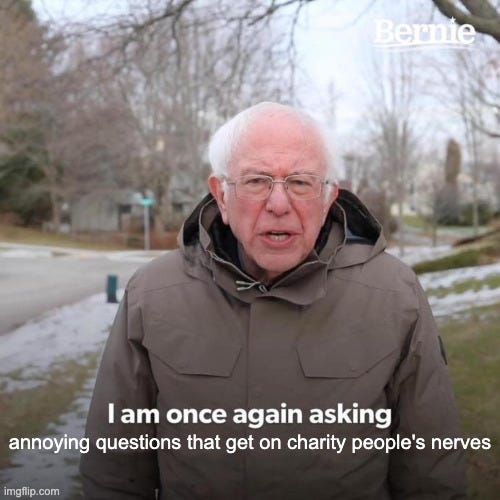
So I suggested we sidestep this. Because honestly, if we want to get beyond narrow sectoral and segmentary interests, we need to turn our attention to the bigger gap in our own industry.
My argment was that we need an individual membership organisation (where people join, not charities) for the whole nonprofit workforce. That would give us more democratic representation for the sector, starting from the workforce up.
There are all sorts of reasons for this. First, a democratic membership organisation of individual workers could better represent the true views of the sector and those in it than solely managerial levels who must be bound by institutional politics. CEOs are gonna CEO, and trustees are gonna trustee. They will put industrial interests first, because it’s their job, if they are drawn from institutional members. But take them out of that space and you may find they take different positions (I know I have). Even if they don’t, look at the balance of numbers: what may work for charitable businesses may not work for workers and clients. That is a discussion and debate worth having, on a more democratic basis.
It could also span the divide between people in funding organisations and the funded - grantmakers and grantees have a lot more in common when you take them out of their immediate professional roles. It could move us away from the anxieties about political alignment that constrain organisations.Create a new body drawn from their membership, and their voices are liberated. As a force for the people of the sector, it would be free to take positions in tune with our values – not with the business interests of larger charities, philanthropists or government.
It may also provide an outlet for all of our deeper concerns about how this industry works, and even a restorative for the morale of the sector. After all, my argument has always been that silencing critique is what damages morale and stokes burnout. Gaslighting is exhausting.
In this, it’s important to note that the two best known membership bodies in the nonprofit world in the UK are NCVO and ACEVO (the Association for Chief Executives of Voluntary Organisations). One represents businesses, and one represents CEOs. This is basically a VCS version of the CBI (Confederation of Business Interests, I mean, Industry), and the IoD (the Institute of Directors). Neither of those proivate sector anaogues claims to represent its workforce, either in worldview or industrial matters, so assuming that NCVO and ACEVO can do so in the charity world seems excessively hopeful. Not because they aren’t decent people, doing good work - they are. But because they have to represent the interests of their members, and their members have the interests of the industry and the market and economic forces that drive it at heart. With that comes ideology, whether overt, or, more likely, unconscious.
So, “without something that allows us more directly to represent the voices and values of the vast majority of the charity sector – its workforce and, by extension, the people and communities it supports – these organisations risk becoming, in effect, liaison with governmental ideology, B2B commercial services bodies and federations of the largest corporate charities,” was what I said in Third Sector. (Shit, did I really say it like that? I don’t think I’ll be getting any invitations to NCVO or ACEVO’s after-work drinkies any time soon….
[Edit: somebody suggested today I need to point out I’m not actually actively hated by most of the sector - it’s just schtick. Because, let’s be honest, most important people don’t really give a shit what I say or even know who I am….]

Isn’t it time for a union?
So, following this along, what could such a democratic membership body be?
There was some positivity about the proposal, and of course, a few objections or alternatives suggested, with some good debate on social media. Many of the immediate responses to the article focused the need for more, smaller infrastructure bodies with memberships of organisations. That was where the current energy was, after all.
Others suggested that exactly such bodies already existed - none of the ones proposed seemed the same to me at all. (There were quite a few indignant responses: ‘How dare you! That’s what we do/ what we want to do/ I haven’t really read the post but we might do and I feel threatened by someone potentially competing with us’ - good old LinkedIn).
But some of the more thoughtful comments were union-related. I Sony have space for some of my thoughts about unions in the article - but it is obviously the most immediate response, and in the comments on Linkedin, people were quick to ask ‘why reinvent the wheel? Why not just join a union?
Well, yes, unions like Prospect union or Unison or Unite the Union or Community could potentially fulfil part of this need. And I was quick to respond that, on the one hand, that was exactly what I was suggesting. But on the other hand, I don’t think charity workers joining existing unions works terribly well beyond the matter of better working conditions for individual workers (which, admittedly is the case for most unions now), in larger charities. And even there, much as I dislike the exceptionalism pushed by the great and the good of the sector, there are some very specific barriers.
Unions are tricky on the Left
There are also wider problems with unions as whole, which the left has struggled with for many years. Bureaucratised unions have tended to focus more and more on their members alone, rather than creating blocs to struggle for the rights of working class people as a whole. US activists have been criticial of the roles of organisations like the Teamsters, who in fact most recently supported Trump: ‘Unions became narrowly focused on serving their existing members and making backroom deals (‘Politics is something we do’, Jacobin issue 60, 2025, Eric Blanc and Bhaskar Sunkara). (Another note: union members overwhelmingly supported Thatcher in 1979. Now that is a LOT of leopards and faces.)
What we have to remember - which is difficult these days - is that unions were at one point seen as a way to create radical, revolutionary change in all of society, starting at the root of economic production.
As one activist and unionist put it:
“When workers form these organizations whose job is to deliberate and get the best deal out of the system, they become invested in the system if they can get a good deal.
This is what happened to the trade unions in the lead-up to WWI and WWII. This is sometimes referred to as “golden handcuffs”. The more unions allowed themselves to be constrained by the benefits of the fordist era, the less they acted as organizations where the class struggle happened and the more they opporated like an insurance company for workers. In fact, a lot of unions advertise themselves to workers these days like insurance companies—you’d rather have it and not have to use it. They’ve also become modestly lucrative pension funds. Why spend money on a strike that could get your local decertified when you can take the same money and ensure a decent retirement fund for your members?” - Techno Femme, Reddit/ Marxism
There has also always been the problem of unions focusing on work, and employment itself. But what of all the people who work in other ways? Freelancers aren’t allowed to join many unions, but even if they do, they can’t be very well helped by them at least day to day. People who work as unpaid carers, parents, even the ‘unemployed’ for whatever reason, may be technically allowed to join unions, but they are very clearly not designed for them.
And we have to remember that one of the original plans for democratic socialism (and indeed, the undemocratic kind…) was to form many unions and then unite them to force larger scale political change. This was often through the mass withdrawal of labour - coordinated general strikes. (Which have now been outlawed for many years in the UK, btw.) Indeed, this was how Solidarność managed major change in Poland (albeit for complex political ends). But when you don’t have as much in common as you once did, economically or indeed culturally, all of this gets trickier and trickier. And unions are in many ways designed for a simpler economy with vast industries of fairly homogenous workers in factories working for large employers. They are a model formed in industrialisation - but we live in a post-industrial world. The model of many trades, industries and crafts then uniting into a larger union - as indeed the TUC does in the UK is much more limited these days, and harder when there are actually much more complex political and economic factors at work.

‘I just can’t see it,’ said one person in response to my modest proposal: ‘There just isn’t that solidarity’. Well, first of all, the point of unions is to create it, not just act on what exists. That’s like saying ‘we can’t have unity because we’re not united’. But is it an uphill struggle? Maybe so. Others said they were having to actively try not to immediately write it off - not a good sign, but their concerns are realistic. How do you organise this with the sheer lack of time people have? Well, yes - and that is very much the issue for union organising across the board. I don’t have an easy answer to this, because I don’t have time to do it either. (I barely have the time to write the articles.)
The standard in the VCS is to suggest a sugar-daddy funder might want to help. But why would they pay to organise, essentially, against themselves, at least at a corporate level? And there is a strong belief more widely that charity workers are not in any way deserving of even fair conditions, never mind charity or investment.
Why a union might not work for nonprofits
But beneath all of this there are even deeper problems. The charity sector is, on paper, organised labour. We have workers, employers, and the beginnings of collective organisation, at least by institution. But the conditions that make trade unionism work elsewhere simply don't apply here, and understanding that is fundamental to the nature of our sector and where power actually lies. When we’re looking at apocalyptic funding cuts, low pay, precarious employment, burnout, and the horrible awareness of all those people left behind by our existing political economy, the obvious response woould be collective action. But the charity sector's relationship to power makes that harder than it looks - and as I traced that out for myself in writing and reading over the last few weeks, it reveals something uncomfortable about what charities are actually for, and how it also makes them poor candidates for unionisation.
The problem is, a huge amount of the sector is not only small, but also funded by discretionary giving. This shapes everything about our power - or lack of it. When unions representing charities stand against public sector funders, or corporate charities who mostly spend individual giving money, there is more of a chance of success. For example, in Scotland, there are new sectoral bargaining rules coming which apply to commissioned organisations as well as direct employees of the state. Oxfam and St Mungo’s have seen industrial action. Charitable housing organisations too.
But for many of us, these relationships of industrial scale and a relationship to income of ‘services at a price’ simply doesn’t translate. Pulled together from a patchwork quilt of foundation grants with restricted funding, a few local authority crumbs, and maybe a bit of CSR cash, there is little opportunity for industrial action because the income is not related to a direct profit motive. Indeed, restricted funding is probably the greatest barrier to just payment and treatment for staff in our sector - and that, of course, is decided by trusts and foundations, who do tend to represent (and be steered by) the wealthy. (Note: the insistence on Living Wage by the largest funders is to be welcomed - and yet, their pots of funding have not increased to cover that… Charities are simply subsidising that from other sources, usually by taking more time from staff than they can pay for.)
Our bargaining power is limited because we serve at the pleasure of the king - we aren’t even part of an industrial system that needs us to survive and make a profit. We are not like factory workers or even nurses dealing with a huge employer that needs to make ends meet at a reasonable cost. We are ‘voluntary,’ and our income is too. It is easily possible for the people whom we rely on to pay us to simply stop doing so. That is not something that other workforces suffer in the same way.
Why? Our relationship to power is much more tendentious and vulnerable than that of people who are directly ‘profitable’. Someone who owns a factory for profit needs their workers to make that profit. They need to pay as little as possible to make the most profit. But if at a certain point everyone walks out and says they won’t work until they raise wages, that employer will need to come to the table. The law of extraction - we pay you less than you generate for us - is direct, which means that there is a clear reason for employers and shareholders to want to keep their workforce at least minimally happy.
But in the nonprofit world, our extraction is buried at multiple levels of ideological deployment and financial transaction. If the financial transaction were visible it would be less effective socially - the fact that nobody can see we offer real value to those making a profit somewhere is partly how charity works, and how it gives moral authority to the people who fund it.
But the burial of that transaction - in many cases probably even from some level of the consciousness of those who undertake it (fundraisers, donors) - is not just why it works but also why unions struggle to work for us. In the nonprofit world, our production is even more complex, even more bound up in cultural signification, in multiple power relations, and a hidden ‘deal’ between wealth and work, to fit neatly into a model of collective bargaining which reaches an agreement between capitalist extractor and the producers they extract from.
They don’t rely directly on our labour for profit, but for ways to support their profit-making that at some kind of wider cultural and social remove. For example, for their own sense of moral authority. For political access and expediency. For management of reputation and image. And for the management of ideology - and minimal, grudging, support of the ‘deserving’ poor. And indeed, for helping the dominant powers look ‘humane’ when they do terrible things. It’s part of the compact between state and governed - and also increasingly between public and private, and social compact.
There is, of course, also a very basic structural problem: you can’t collectively bargain with 160,000 businesses. Overall, in a sense, the shape of the nonprofit world industry is a great way to atomise us. Thousands of small supposedly value-led organisations being pitted against each other in competition, as we have seen since the marketisation of the sector since the 90s, is a great way to ensure that people don’t come together for a cause - or more broadly, a picture of a more just world - and focus on their own little organisation and getting in the cash. Let’s also remember that this is part of the same ideological and political trajectory of Thatcherism and privatisation (and taken forward at speed by New Labour).
What people often don’t tend to recognise is that one of the key reasons for Thatcher’s privatisation agenda was to neuter unions. With private companies, there is far less reason to worry about industrial action than with public sector workers (because your workers don’t have to vote for you). Unions could no longer hold politicians to ransom if they were successfully atomised across providers. (Clearly this has not worked so well in transport…) But that same process of privatisation and atomisation is part of what happened to social and health services as they have been farmed out to the voluntary sector. We are part of the same movement of privatisation that neoliberal statecraft and economic dogma has pursued for its own reasons of atomising a workforce, through competition and marketisation.
So what can connect us?
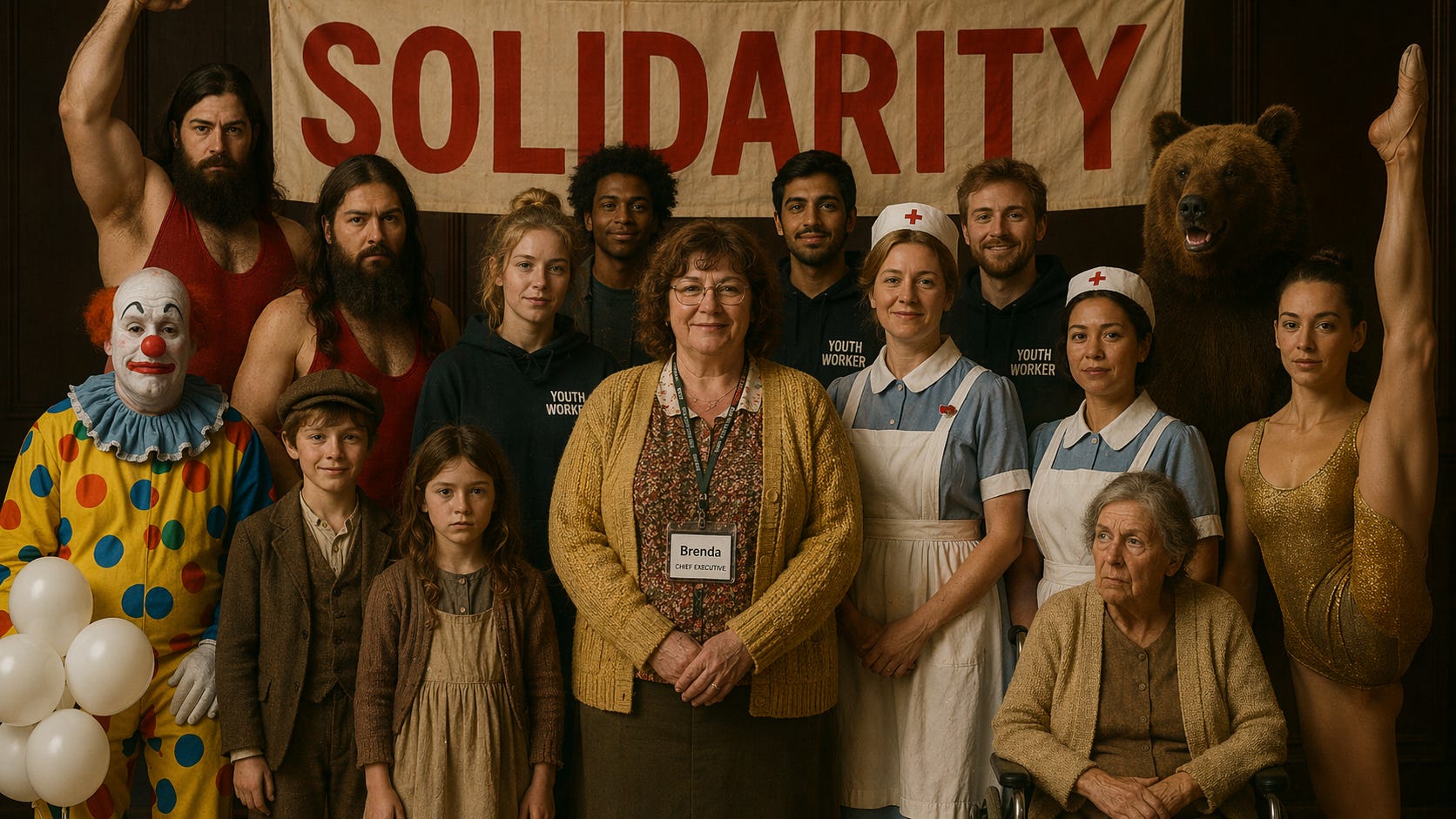
You might then wonder what connects us, and how we could develop solidarity and a louder, more powerful voice?
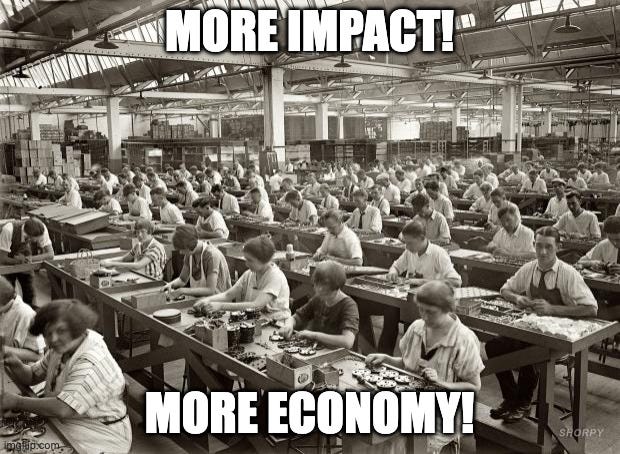
Well, I find it interesting that over the course of the last 30 or so years, as nonprofits have taken on much of the work of the public sector, it has also taken on the dogma of New Public Management. And that, in the end, what the Acronyms and think tanks teach us is that all that can connect us is managerialism in the name of whatever branding there is at any one time: Impact. Efficiency. Social change. Positive Outcomes. Data, theory of change, all of that management sector stuff that we have imported from the public sector, which in turn imported it from the private sector. These usually have little conneection to the work that the vast majority of frontline staff do, and are generally bureaucratic, managerial, financial and data-driven. In a sense, sector solidarity, our shared values, and workforce representation has been replaced by managerial techniques, led by sectoral industrial bodies who must present themselves sometimes as uniting us through a technocratic philosophy rather than a culture of practice and principles.
My sense is that a new individual membership body would need to focus on values, principles, and a vision of a better, more equal world.
You see, people say we won’t agree on anything because we are not aligned and so different. But hold on - really? That sounds like a bit of a confection designed to keep us competing. How many of us believe people should get welfare benefits if they are sick? That we should support people with disabilities. That we should tax the ultra rich. That we should be supportive of minority communities, and avowedly anti-racist. That we should not plunder the natural resources of the planet and destroy its ecology. That we should be kind and welcoming to migrants. We should hold resources in communities and not sell them off to the highest bidder. That we should take a holistic view of the quality of people’s lives and not reduce them to outcomes and interventions. That arts and culture are important to the quality of people’s lives.
In that comes the potential for us to act as a moral voice - perhaps, in a secular way, as something like the Church of England does. It would allow us to speak out about the issues we face and what connects them all - economic extraction, atomisation, cruelty and exclusion - and argue for the things we believe in. A profoundly humanistic, holistic voice of care, love and community in a world which has thrown such things aside as surplus to requirements - or rather, of no use to Capital.
That would also need to include a fuller understanding of ourselves as people involved in this. Our own workforce needs are not beyond the purview of such a voice, because we are people too (well, most of us), and, especially at the lower levels, and in concert with our colleagues in areas like care work or unpaid care, we are a group largely left out of demands to a more egalitarian society.
What I want to ask is: what kind of power do we have, or could we have? Withdrawal of labour is difficult in the traditional union model for most of us. But there must be other kinds of power, and charity workers and nonprofits demonstrate this every day. We organise change, as well as provide care, for a living. How can we use that power, that latent capacity, to make broader social change?
And as my friend Hannah Kowszun from People and Purpose pointed out to me, it has worked for sex workers. We may not be sexy but we know how to hustle.
The Sex Workers Union in the UK is a branch of the Bakers, Food, and Allied Workers Union. No jokes - I’ve been trying to find a dedicated branch of that type for nonprofit workers and I can’t. Can anyone help me? Shout if it exists!
Are we revolting?
I would go one step further: I’m very taken with David Graeber’s idea of ‘the Caring Classes’. Graeber, involved with the Occupy movement, noted that the majority of those involved in movements for social justice and change were from the ‘caring’ or ‘helping’ professions. That is, a
“class of caregivers—that is, in the broadest possible definition, as anyone who saw their work primarily as helping, caring for, or furthering the development or flourishing of other human beings (or, arguably, living beings)—what I called the caring classes, or the class empathiques (Nafe Krandi-Mayor) or courgeoisie (Holly Wood).” (David Graeber, ‘The Revolt of the Caring Classes, 2019)
Health workers. Teachers, Nonprofit workers. Universities. (He also noted that many of them were middle class professionals - there is much to say on that, but no time here.) In this, he suggests, the ‘caring classes’ may be a locus of social change, rather than a traditional unionised industrial labour force. The idea is complex and evocative - and attractive, I think, in societies where love, care, and community are forces actively controlled and minimised by our most powerful social and economic forces.
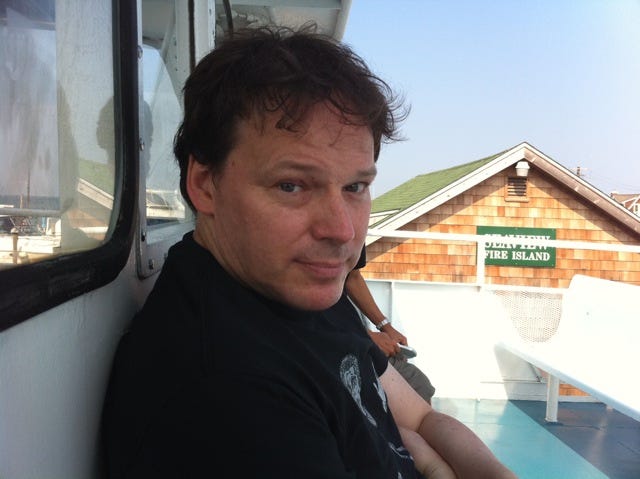

Could a union of sorts that brings together all of those of us in the nonprofit world contribute meaningfully to what Graeber calls a ‘revolt of the caring classes’? Not alone, but in partnership with other groupings, as part of a wider set of movements for social change? There will be faultlines - I can see them already - but there always are, and they are standard left faultlines. And the levels and degrees of all these things are debatable. Welcome to democracy. Everything is a negotiation.
If your answer to all this is ‘Erm… blimey, I dunno’, then you’re doing the right thinking. Or about to. I don’t propose this as a solution to the world’s problems. Graeber suggest it has revolutionary potential, and I’m not sure I’d go that far.
But I do think that a uniting force - through democratic membership and individuals united by purpose, born of a certain view of the world driven by their work relationships and subaltern relationship to power, might not be trivial. If nothing else, it could provide a better way to organise a sectoral voice with shared values, rather than shared techniques of measurement and management. That, I’m afraid, is all the unity we have in our sector relationships at present.
Drop me a line and tell me what you think.
Interventionitis Let Southport Down
With the devastating report from the Southport inquiry this week, I’m posting a link to my article in Barely Civil Society about this last year, when the first evidence started to be heard.
My views haven’t changed, much as new details have emerged - and, I fear, neither have the prevailing ideas about what I call ‘Interventionitis’ - pulling issues from the headlines and throwing money at them to fix their surface manifestations rather than any deeper thinking about people and societies. I first wrote about this in 2020, coming out of a role where youth violence was a significant focus - and none of us really believed it was the right one.
The chair of the inquiry said it best: there was an “inappropriate merry-go-round” of state bodies passing the buck and their “frankly depressing” refusal to accept responsibility, saying: “This culture has to end.”
And this is not just cultural but structural. Removing the glue of person-centred support leads to exactly this.
Until we start to recognise the need for deeper, holistic approaches to care and community, and funding those, we will keeping wasting a fortune on things that are easy to count and so far from the humanistic values and approaches our social and community care need.
Meanwhile the knife crime units, the vast money spent on researching each ‘intervention’ one by one ad-infinitum, and of course, billions on one-off quick fixes like National Citizen Service, which draw money away from communities and services that - let’s be clear - I don’t suggest would have prevented this case. But they could have created better environments for our kids to flourish and not treated them solely as clusters of social problems needing a pathway and a referral.
Interventionitis: Why Headlines Don’t Make for Good Social policy.
The funny personal bit
This week my most popular post on Linkedin, by a factor of three, was one about Hot Cross Buns, where I proclaimed that I had eaten so many, my nipples were now raisins, my blood was infused with the heady aroma of mixed spice, and my face was imprinted with a cross like an Essex roundabout. Everybody loves to watch someone rave on a professional network about quasi-religious confectionery. This buit on my previous posts about Jammie Dodgers, a personal obsession, more so since I no longer get to eat them much.
But then something evenmore amazing happened, and my mate Luds let me know about this in Aldi.

I literally ran out of the house in between meetings and got one. Yes, it was amazing.
But this is all part of a personal quest to ensure that when I turn up to meetings, people have read my posts and prepared a selection of declasse British patisserie for my personal delectation. It already works with workshops, although sometimes they provide fruit which is like, WHAT?
Meanwhile, after being cruelly spurned for funding for Barely Civil Society by a charitable funder - one of the few I’ve never pissed off yet - I have been continuing to work nonstop and try and get various articles written and meetings and conspiracies happening alongside a pretty full workload. It is knackering, but it could be worse.
I would like to make some comments on the current world political sitch, but as for all satirists, it really is just at the stage where you can’t be satirical when the reality is beyond satire. I just can’t compete with the Fat Orange F**k Show.
And thus ends our work here today.
Oh wait…
One Instagram post very worth watching
See you in three or so weeks.
Barely Civil Society is about making the nonprofit world braver.
Here are three ways to help.
1. Subscribe! And become a patron!
Barely Civil Society needs patrons to stay active. All the content is free, but if you’re able to support this work, it means a lot if you can buy a paid subscription.
2. Share Barely Civil Society: Lord knows the algorithms are not in our favour.
3. Buy me a periodical!
There are practical reasons to chuck me a fiver: I’m saving up for journals and periodicals/ libraries access so I can keep better track of what is happening in the sector. Can you chip in and buy me a periodical? Or a Jammie Dodger?


Absolutely
One of the best articles I've read. The standout for me: 'unions are in many ways designed for a simpler economy with vast industries of fairly homogenous workers in factories working for large employers. They are a model formed in industrialisation - but we live in a post-industrial world'
Lots of food for thought and not just from a non-profit viewpoint - as you allude to, many of our unions (leadership and members) lack Bregman's moral ambition.