


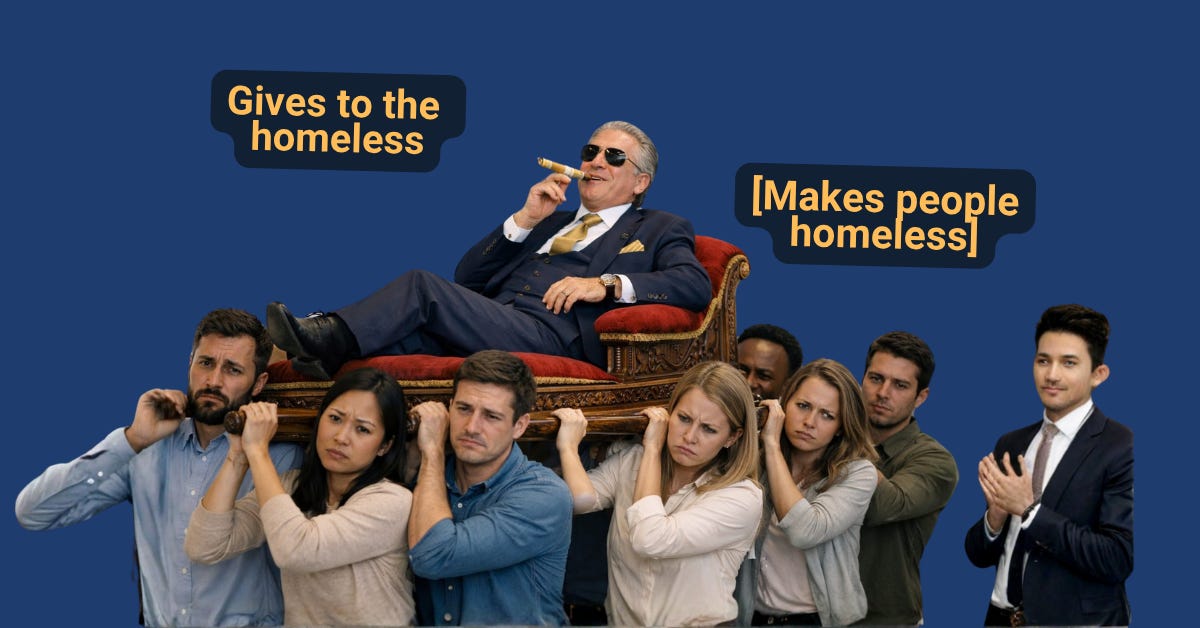
The only good billionaire is, erm, nope.
Asif Aziz, billionaire landlord and owner of Criterion Capital, was standing on a podium, next to Mayor Sadiq Kahn in London. They smiled for a photograph. Above the assembled crowds, the Ramadan lights Aziz funded through his foundation twinkled.
What a scene. A great business leader and philanthropist giving back to his community. Celebrating the diverse population of London. What’s not to like?
Well… Not long before, in another part of the city, doors had been knocked on, and notices pushed through letterboxes, as Criterion Capital had begun turfing out tenants just before the Renters’ Rights Act comes into force. According to London Centric,
“Money from the housing blocks affected was then flowing directly into the Aziz Foundation, the family’s PR-friendly charitable arm. The Aziz Foundation then funded the capital’s Ramadan lights and launched a partnership with the youth homelessness charity Centrepoint, who today distanced themselves from the family.”
Can Sadiq Khan stop Asif Aziz’s mass evictions? Jim Waterson, Cormac Kehoe, and Liv Facey, London Centric, Feb 27th 2026.

Even better, they report that the mass evictions are happening in order to allow Criterion to offer the properties to local authorities as lucrative temporary accommodation. Solving homelessness perhaps?
Aziz’s philanthropy has put him right up on a literal London pedestal, all the while his actions make Londoners homeless.
Shocked, perhaps, Khan then made a public intervention, calling for the evictions to be withdrawn. Reports suggest that residents were bizarrely told face to face on their doorsteps by a mysterious man that if they recorded videos asking to stay, they would be allowed to do so. Criterion denies this happened. And the evictions, as of last report, are continuing. Centrepoint, the homeless charity for young people in London, has cut ties.
I can almost imagine Khan, crestfallen at his desk, shaking his head: ‘But I thought he was one of the good ones…’
The brilliant London Centric broke this story. They called the fact that money from evictions is flowing directly into Centrepoint and the Ramadan lights a ‘dark twist’. But this is anything but a dark twist - it is part and parcel and standard practice for elite philanthropy. It’s not a bug, it’s a feature.
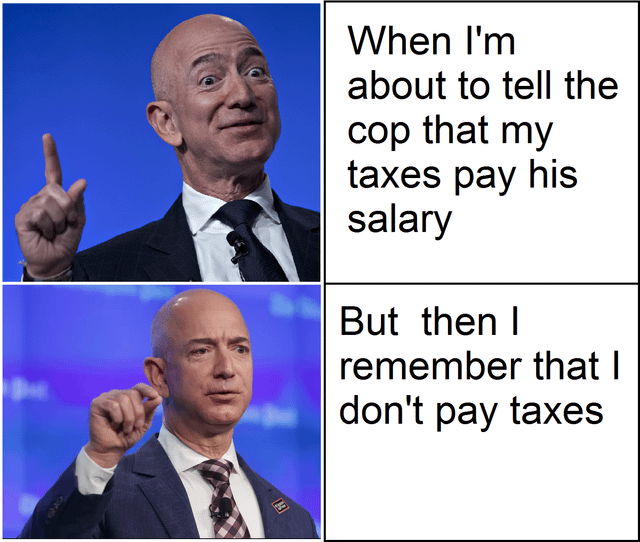
Another reckoning for elite philanthropy?
The Epstein files release showed perhaps one of the most blatant and overt cases of elite philanthropy as reputation management, and an enabler of access to power. That was wide-awake bad faith and cynical manipulation. Most philanthropists are not Epstein. Perhaps Aziz and others like him believe deeply in solving homelessness. Perhaps his giving is truly a matter of humanitarian intent. But it would not be unreasonable to question whether there is a level of hypocrisy here – or something even more cynical at the heart of elite philanthropy more broadly.
And how could we not see political influence, status management, laundering of reputation and redirection as a central part of this process in the philanthropic work of Carlos Slim, the Qatar Foundation, the Dangote Foundation? There are countless stories of this kind of practice across the globe. It is likely as old as wealth itself. And yet the sheer level of denialism in the sector takes my breath away. Talk of rotten apples, otherwise ‘pure’ sullied foundations, the endless cry of ‘not all philanthropists’, become louder at these points.
The problem is that these moments of the greatest apparent hypocrisy open up fractures and faultlines in the fictions and mythologies we have to tell ourselves to make peace with our work. To me, there always seems to be a radical, perhaps hysterical, blindness to this in the philanthropy sector, at least in terms of our day-to-day discourses, and on the part of its cheerleaders. Is this in good faith, or just matter of people keeping on trucking and mouthing the right words?
If’s almost as if, if we talk about it, the money will all suddenly vanish in a puff of smoke. And indeed - it probably would.
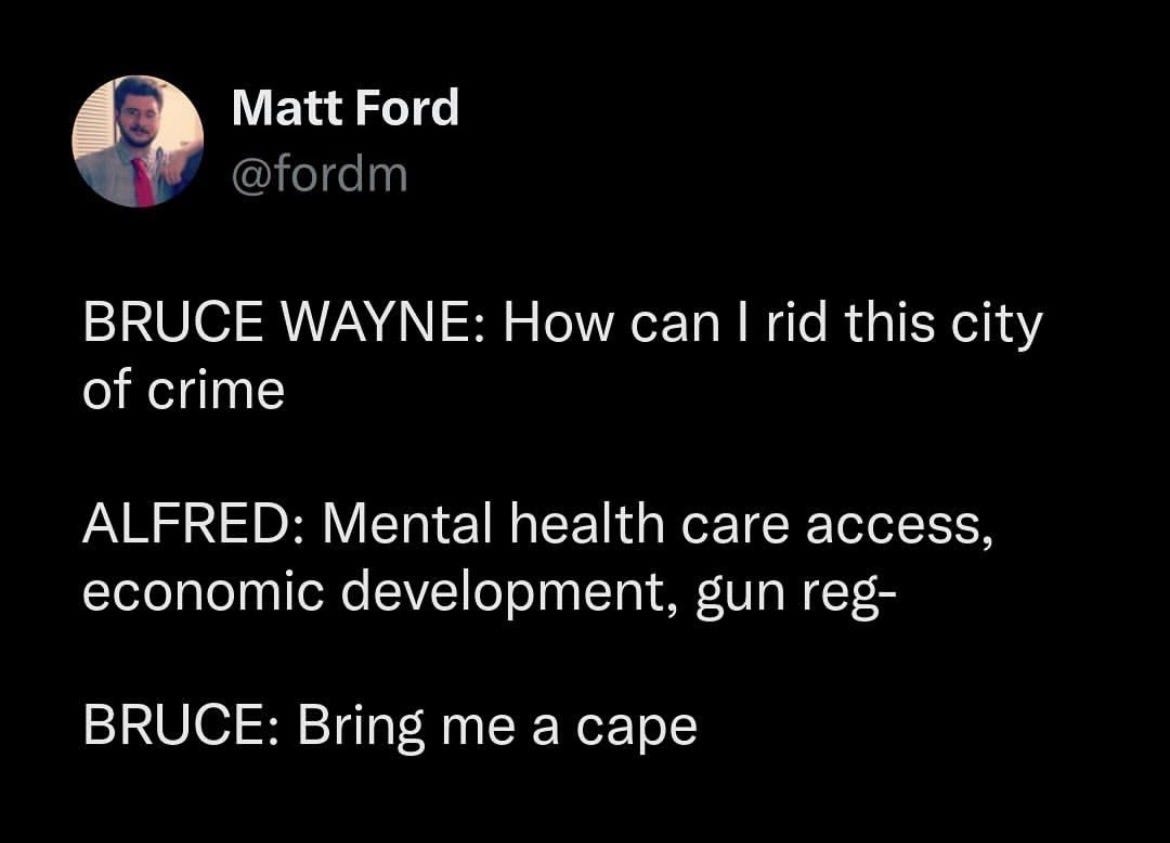
This blindness, or at least, silence, seems to be something largely confined to the ‘funder’ (supply) side of the equation, and particularly of course to those whose work involves taming, tickling and chucking under the chin those who have proven just how good they are at holding on to money.
In the day-to-day non-profit sphere - the people doing the actual day to day work - I think we are all too aware, and, at least among ourselves, fairly open about these issues. We know what is happening. And in terms of study and discourse, antipathy towards philanthropic donations is common amongst radicals in the nonprofit sector, who see the money in many trusts as ‘twice stolen’ - once through profit extraction, and once, in many cases, through tax avoidance. Indeed, they then often spend a lot of this on the people who stole it - e.g. at the opera or with a new wing of a gallery. (See Ruth Wilson Gilmore in ‘The Revolution Will Not Be Funded, 2007).
But my sense is that the ‘philanthropy’ industry, especially as it relates to the ultra-wealthy donors of philanthrocapitalism, has to internalise those values much more. It would be hard not to. It probably is required for success. And for sheer mental health - better to truly believe the lie you tell yourself.
My sense is that many people working in elite philanthropy have persuaded themselves that their job is actually to secure and spend money to do good. But I think we need to be clear-eyed about the fact that that is only half of the job.
Because surely much of the job is to promote and justify extreme wealth and class privilege. Alongside a good deal of flattery. We are integral parts of the propaganda and PR machine for some of the worst people on the planet. We are not just ‘doing the good work’ with money from ill-gotten gains, but acting as propagandists and mythologisers of the elites that the rest of the world is increasingly coming to realise are parasitic, pathological and near all-powerful.
My question is this: can’t we at least be honest with ourselves? Be honest with our communities and colleagues? And ask ourselves, can those of us who truly believe in ending such rank inequality ever feel right about actively promoting their mythology?
Maybe this ideological work, not a new water well in a Global South village, is what their money is really paying for?
At a structural level, one of the key social, cultural and economic function of philanthrocapitalism - and, I think history shows, its antecedents - is to promote the ruling ideas of the ruling class. As I’ve noted before, whichever class is in charge in society also rules philanthropy. Not just because they have the wealth to give, but because the practice is of greatest benefit to them, in their attempts to ensure society puts their economic interests at the top of the pile. Philanthropy helps shape the ideas of the world to naturalise, to cleanse, and to offer a patina of moral justice to their power. Religion, aristocracy, the rising mercantile classes, the industrial bourgeoisie, the robber barons of the Gilded Age, the technocrats of the state-industrial- nonprofit compacts, and latterly the rise of philanthrocapitalists and tech billionaire oligarchs: all have used ‘philanthropic’ giving to naturalise and justify their privilege.
And that means that as any challenges to the current billionaire plutocracy come up, philanthropy is highly likely to be harnessed to control problematic ideas that may come to challenge their hegemony.

What next?
This maters because times are changing - maybe. Philanthrocapitalism began at a time when the new tech elites were shiny, new and disruptive. They seemed exciting. They seemed to offer prosperity for all.
That is now where we are now. The rise of what the ruling class mouthpieces of the press and politics are derisively, and strategically, calling ‘left populism’, is making more and more people aware that this is a deeply suspect structure that is in no way in their interests. And the ultra-wealthy know it.
Dario Amodei, the CEO of Anthropic AI, recently reiterated (in a long, involved state of humanity essay about AI and social change) that he believed that philanthropy should play a larger role than ever. He noted with disappointment that the ultra-rich were becoming disillusioned with the idea and its effectiveness. (Almost as if just dumping pocket change on a problem you created turns out not to solve it better than taxation or shared wealth. Imagine.)
But he was also clear that it is important that the ultra-rich are seen to act generously so that any changes to their status or contributions to society (tax!) are reasonable, and not decided by ‘the mob’. You can imagine who ‘the mob’ is here. (Yes! It’s you and me.)
So, just as people eventually turned on the robber-barons of the Gilded Age, despite their supposedly selfless philanthropy, it is quite possible that this new age of plutocratic empire is nowhere near as permanent as those people would like - and indeed, may be as impermanent as they fear. Gramsci’s insight, among many others, was that hegemony is always retained by the ruling classes partly by giving things away. At its worst that may be taxes. Better if it is an opera house, better still if it is training for people to work better on your coca plantations. Some have recently noted that the ultra rich imagine taxes are the very worst thing for them. But there are much more dangerous (for them) options that go far beyond redistribution through taxation, after all. That, perhaps, is the ‘mob’ they truly fear.
What will this mean for philanthropy cheerleading? I suspect that the defences and defenders of philanthrocapitalism will become more and more shrill, more and more likely to resort to ideas about high-minded transhistorical notions of ‘love of humanity’, just as the global population’s calls for control of the extractive ultra-rich become louder.

I’m not seeking purity
This is not about purity. As I’ve noted before, purity is just not a reality - the whole of the world is trade-offs. Power is everywhere. As Mani Hothi, CEO of Trust for London pointed out, even long-established independent foundations are capitalist enterprises. Trust for London are extremely progressive. But as he notes, they invest their portfolio and rely on the stock market for giving. So does my pension. Nobody is ‘pure’. It’s not even ‘a thing’…
But although being an adult is understanding that the world is about conflict and compromise, that does not mean you can act without a moral compass or a system of ethics. Indeed, what I’m finding increasingly interesting is that philanthrocapitalism has centred consequentialist ethics (what matters is the end result – the consequence).
Because of course, ‘impact’ is all about a focus on the end result. I can’t help feeling that focusing on impact is very helpful if you don’t want anyone to think about what you did to get it. Perhaps, for example, you evicted half of London to donate some pocket change to a youth homelessness charity and then focused on social ‘impact’. I can see how you might want to focus at the end of that chain. No doubt it is part of the reason instrumentalist, impact thinking has been at the dead centre of philanthrocapitalism and its destructive influence over the last 15 or so years.
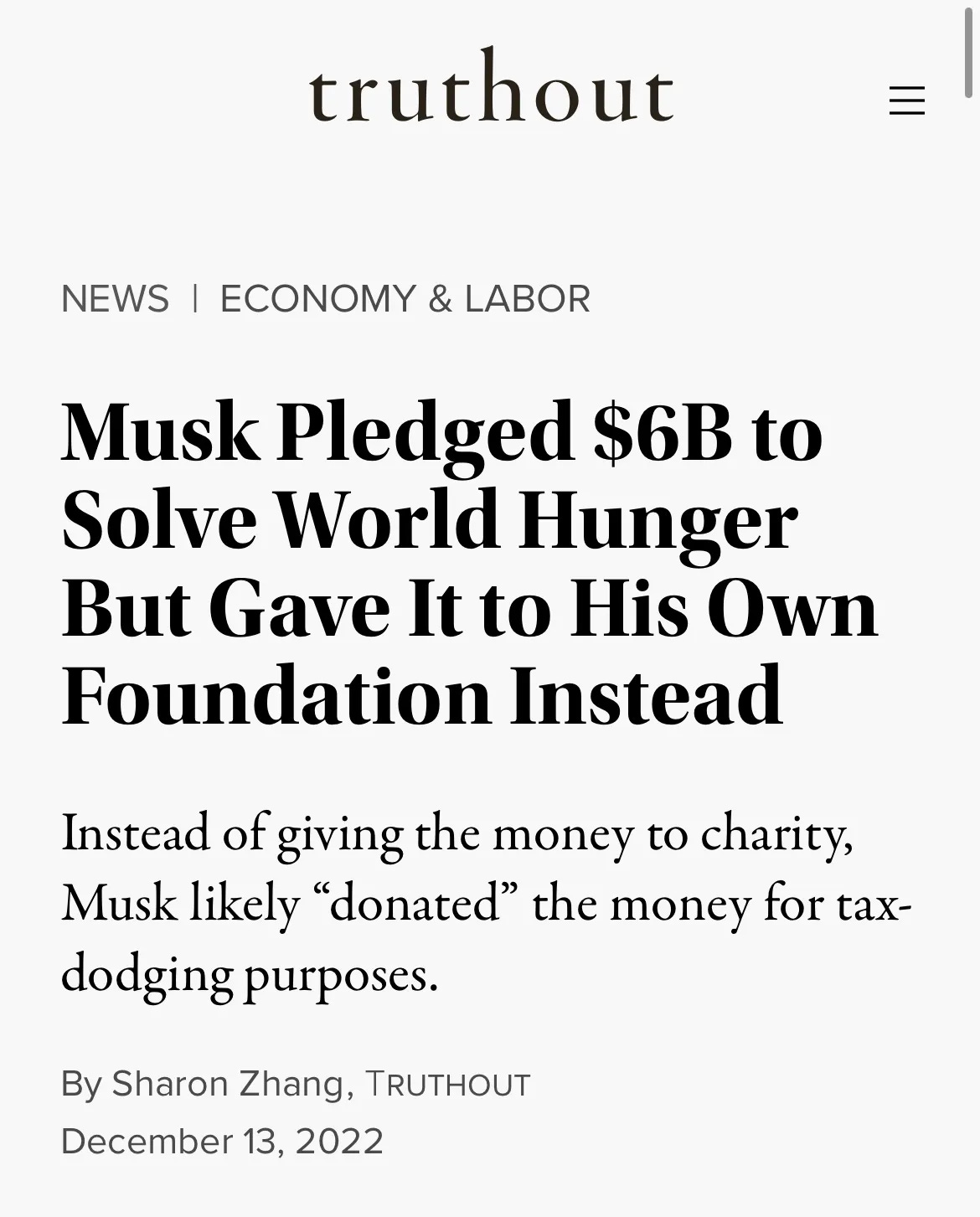
None of this has an easy solution. And the solution to billionaires does not lie with us. But if there was any interim direction of travel worth pursuing within the world of philanthropy itself, it might be toward tighter regulation of donors - which we often resist tooth and nail at their behest. - Amd perhaps most important of all, discouragements from direct control of donations by those donors. Look forward to squeaking from the foundations, the wealthy, and their promoters if anybody mentions that.
Foundations long-removed from founders and with more democratic structures are usually a much better way forward, but the least democratic and founder-driven are among the loudest, wealthiest, and best represented in the world of philanthropy as elsewhere.
Whatever, perhaps the most pressing need for better philanthropy - pending NO philanthropy as I propose - is to pry open the death-like grip of the philanthrocapitalist. He believes he best knows how to spend the wealth he stole - all for the benefit of the people he stole it from.
And we might also ask: is it perhaps time to refuse to lionise and mythologise these people?
No more gushing plaudits. No more press releases and ad campaigns.
A note in the annual report and a polite thank you.
Maybe a badge. Not enamel; one of those cheap ones with the pins that give you tetanus.
And that does raise again the question: if we stopped worshipping, mythologising, and doing the propaganda work for these people, would the money dry up?
I suspect we would very quickly see who ‘the good ones’ are.
A quick reminder
I have no idea where these (below) came from, but they’ve been on my phone for years now. Time to give them an airing.
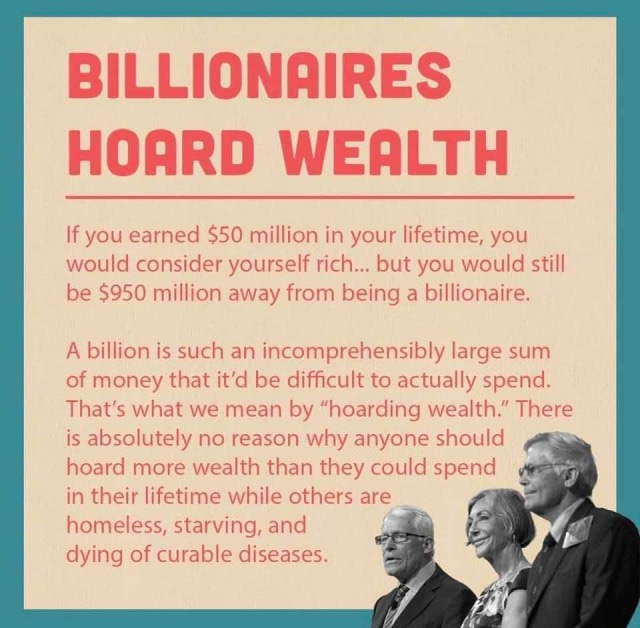
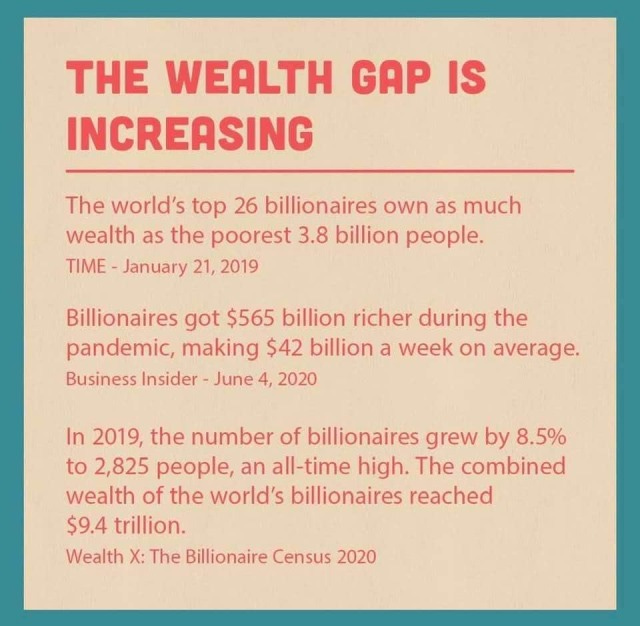
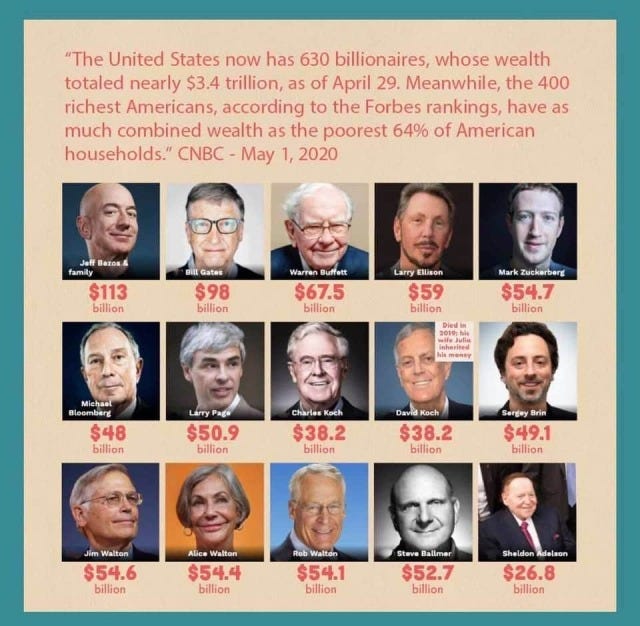
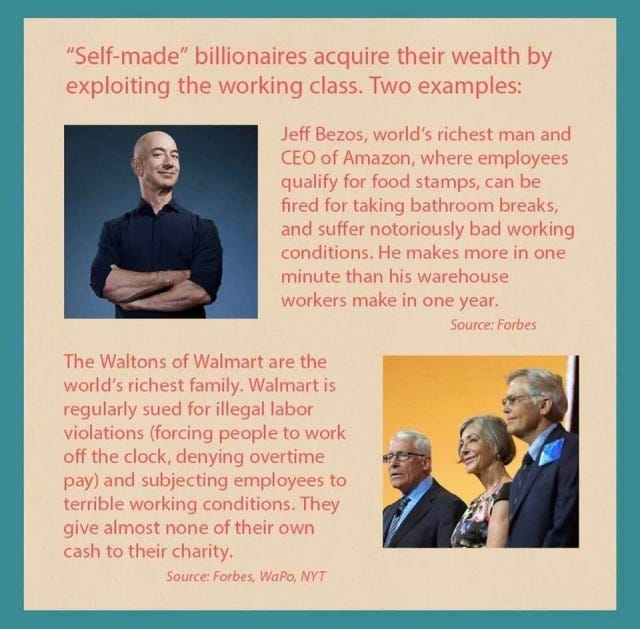
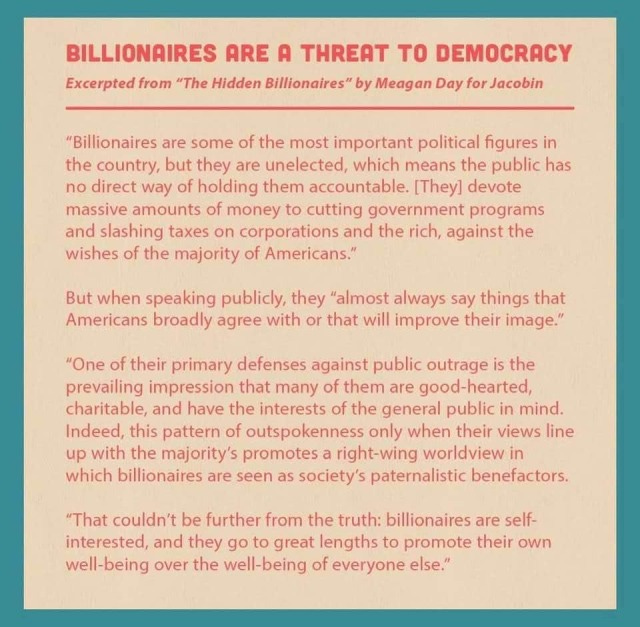
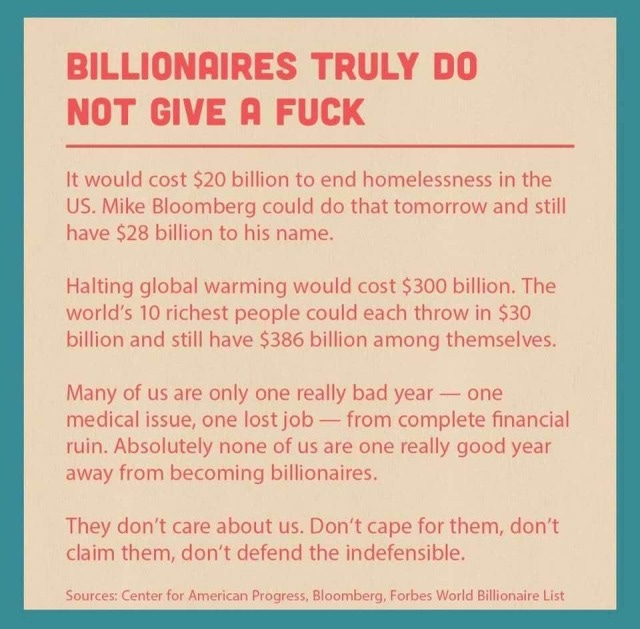
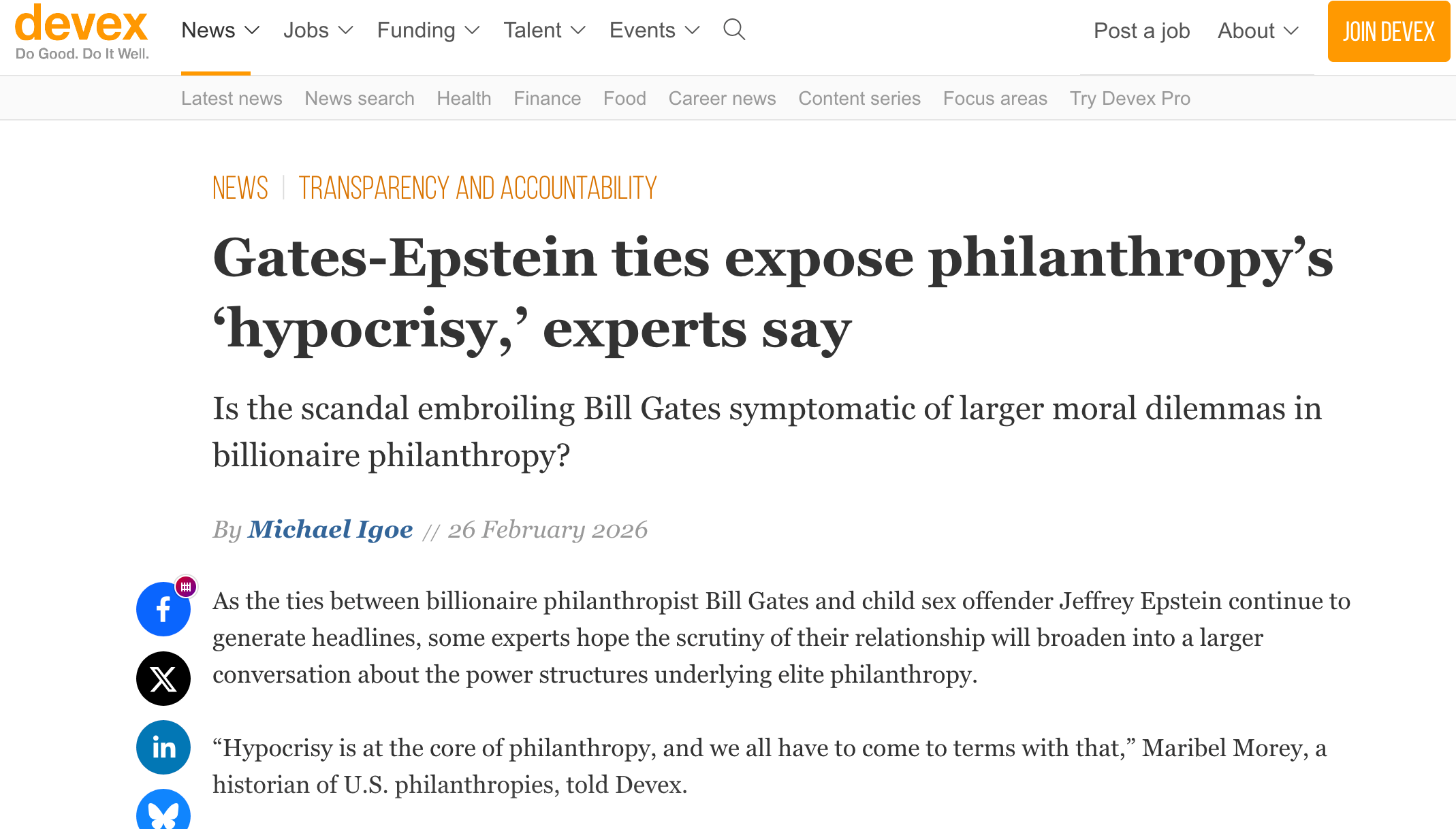
DEVEX: Epstein, Philanthropy and Hypocrisy
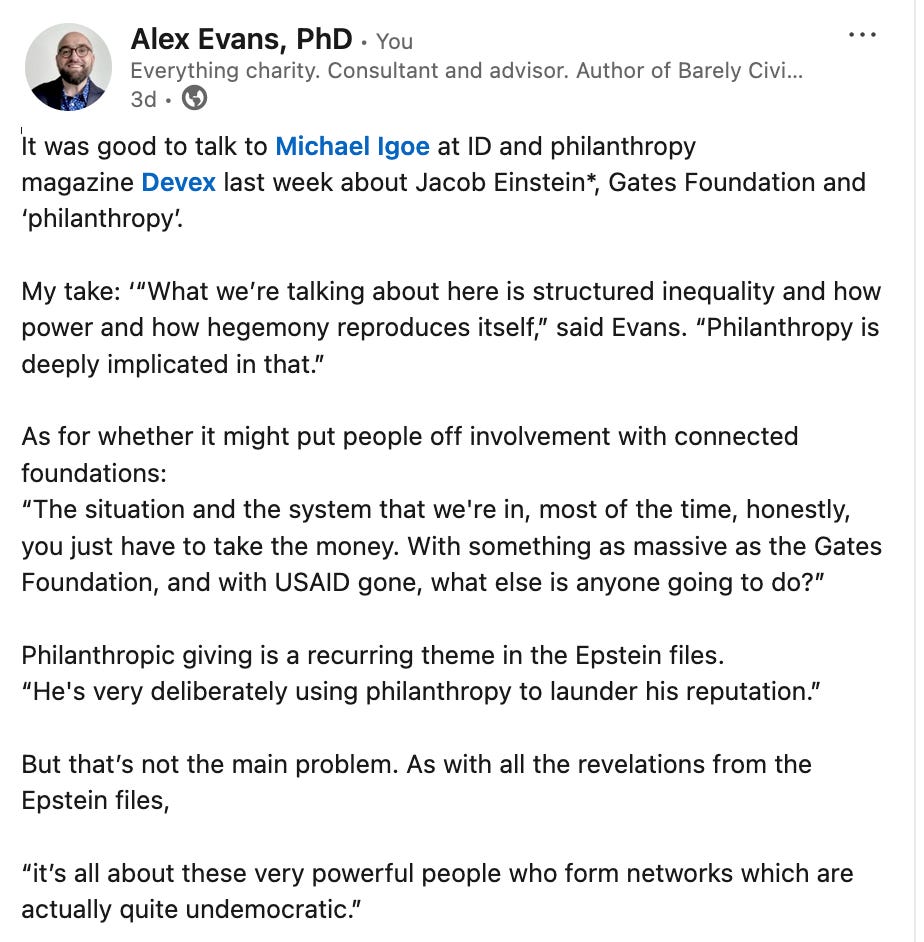
I was in DEVEX Magazine last week talking about the Epstein fallout, which led to a really interesting and enjoyable meeting with the CEO of a large sexual and reproductive health foundation. We had a great conversation about how to deal with all this stuff. (Did we find the answer? Yes of course. Send me a cheque for £500 and I’ll tell you.)
But if you’re up for a chat about it, drop me a line. I’d like to see how people are parsing this stuff beyond ‘being extra careful with due diligence’.
Meanwhile, DEVEX is super expensive and I can’t afford it, but I’ve pasted my quotes below. Because obviously those are the best bits.
The Thanks to Subscribers Bit
Last week I asked people to consider a paid subscription for the specific purpose of helping me access more periodicals, both to keep up to date, and to look at where I can share more of this work to get beyond the current (wonderful) audience. A handful of people obliged, and I’ve been able to find lots of very interesting general material I will share in the future. Next is an academic library subscription. Thanks again!
Guess what - maybe YOU are the good philanthropists….?
Internet Nonsense
This week, a recommendation of one of my favourite Youtube channels, Scroll Deep. I’ve always been fascinated by the absolute insanity of the internet, and it’s great to find somewhere others are too. Every week it blows my mind…. This one has an adorable surprise at the end too.
Until next time
I think I’m going to give philanthropy a rest for a bit now as I’m also writing an article for a philanthropy magazine and there’s only so many times you can nuke your career and bite the hand that feeds you. I still have like 5 essays I never manage to finish because topical things always come up first. We’ll see.
Notably though, I tried to interest some mainstream outlets in the Epstein and philanthropy story, but no dice. I suspect the invasion of Iran killed that story - which of course was Trump’s intention….
Barely Civil Society is about making the nonprofit world braver.
Here are three ways to help.
1. Become a patron and subscribe!
Barely Civil Society needs patrons to stay active. All the content is free, but if you’re able to support this work, it means a lot if you can buy a paid subscription.
2. Share Barely Civil Society: Lord knows the algorithms are not in our favour.
3. Buy me a periodical!
There are practical reasons to chuck me a fiver: I’m saving up for journals and periodicals/ libraries access so I can keep better track of what is happening in the sector. Can you chip in and buy me a periodical?


The meme about Bruce Wayne and Alfred summed up your point so well. Thank you for continually pushing this conversation forward.
For better or worse, PR has driven billionaires to philanthropy historically. What gets interesting is what they do with that public light.